World Blood Cancer Day

Blood cancer is the most common type of cancer that affects children. World Blood Cancer Day is an annual day held to raise awareness of this cancer and to promote blood stem cell donation. 

What is Blood Cancer Day?

Blood Cancer Day raises awareness of the different types of blood cancer and the importance of donating blood stem cells. A stem cell transplant can be a life-saving treatment for some blood cancers, including leukaemia in children as well as teenagers and young adults. 

When is Blood Cancer Day 2027?

This year, World Blood Cancer Day will take place on May 28, 2027.

Blood cancer in children

Blood cancer can affect children and young people’s health, energy, and daily life. The most common childhood blood cancer is leukaemia, while lymphoma is another type. Both account for around 40% of cancers diagnosed in children and over a quarter of cancers diagnosed in teenagers and young adults. Symptoms can include tiredness, frequent infections, bruising or bleeding, and bone pain. Treatment, though disruptive, is effective for many children and young people.

Help support CCLG's work

Your donations help drive life-changing progress for children and young people affected by cancer

Read more about blood cancer

A young girl with a headscarf, smiling and hugging a young boy

Lymphoma in children

Lymphoma is a type of blood cancer. Lymphomas are the third most common group of children's cancers, accounting for around 1 in 10 new cases each year in the UK.

Leukaemia in children

Leukaemia is a type of blood cancer. Leukaemias are the most common group of childhood cancers, accounting for approximately 1 in 3 cases every year.

How curable is blood cancer in children?

Many childhood blood cancers are treatable, and many children are cured. The most common blood cancer in children is acute lymphoblastic leukaemia (ALL), a type of blood cancer affecting immature white blood cells (lymphocytes) in the bone marrow. Acute lymphoblastic leukaemia can affect children of any age but is more common in children aged 1-4 years old.

Treatment options need to consider a child’s growth, development, and long-term health. Childhood cancer symptoms can often look like common childhood illnesses; it’s important to speak to a doctor if symptoms are persistent, progressive, or appear in clusters. Thanks to advances in treatment, more children are surviving, so care also focuses on their well-being and managing any long-term effects.

How CCLG supports those affected by cancer

At CCLG, we bring together the children and young people’s cancer community. Our network of dedicated professional members work together in treatment, care and research to help shape a future where all children with cancer survive and live happy, healthy and independent lives. We fund and support innovative world-class research and collaborate, both nationally and internationally, to drive forward improvements in childhood cancer.

Real life blood cancer stories

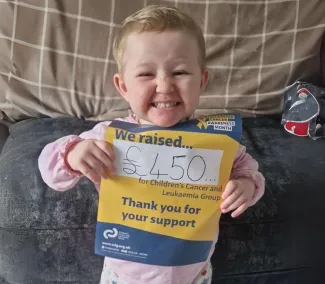
A young girl with short blonde hair is smiling as she holds up a yellow and navy poster featuring the CCLG logo. The poster displays the message: "We raised... £450 for Children's Cancer and Leukaemia Group. Thank you for your support." She is dressed in a pink long sleeve top.

Izzy's story

Izzy was diagnosed with acute lymphoblastic leukaemia (ALL) when she was just 10 months old. We speak to her dad, Adam, to hear her story.

Braidy's story

Braidy was diagnosed with blood cancer in 2025 while pregnant. Here, she shares how she navigated treatment, while pregnant and as a new mum, and why she wants to raise awareness.

Darcey's story

Darcey was diagnosed with acute lymphoblastic leukaemia (ALL) in November 2022 when she was just 17 months old. Her mum, Sophie, shares her story.