
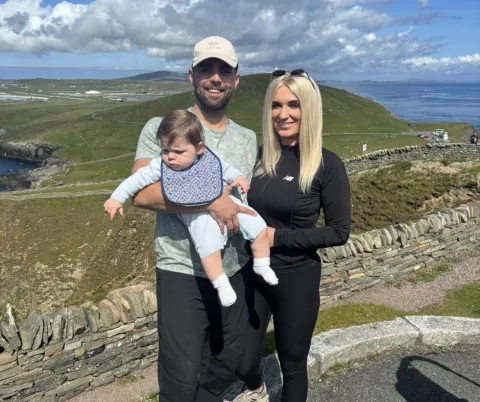
I was 24 when I was diagnosed with Hodgkin lymphoma on 24 September 2025. And, as if that wasn’t enough, I was 31 weeks pregnant, too!
With my diagnosis, everything happened very fast. I had no other symptoms apart from a lump on the base of my neck. I nearly just left it and thought, “Oh, it's just a swollen lymph node, you've been a bit run down”, or “It’s just due to being pregnant”.
But not wanting to take any risks with the baby, I thought I'd go to the doctor and get it checked. The GP sent me to A&E, where I was given you some antibiotics to take for a week in case it was an infection, but they didn’t have any effect.
I’d been referred to the Ear, Nose and Throat department for an ultrasound, which confirmed abnormally swollen lymph nodes. So, a week later, I had a biopsy. A few days after that, I got a call from the hospital asking, “Can you come in as soon as possible?”
I knew right away that there was something seriously wrong, and I already had an inkling it was cancer. I know you shouldn’t, but I’d been very nervous after my biopsy, so I’d been doing a lot of research online when waiting for the results.
So, my diagnosis didn’t come as a massive shock. I even said to my mum on the way there, “You know this is going to be bad, don't you?”
Being pregnant while undergoing cancer treatment
As weird as it might sound to others, I think being pregnant helped me through treatment. I don't know how, but I wasn't sad when I found out I had cancer, I wasn't upset. I just thought, ‘Let's just get it fixed. Let's do what we need to do and get it done’. I had to get through it for my baby boy. And that was my attitude throughout. An inner resilience kicked in.
The nurses were amazed. I just said to them, “What's the treatment? When can we start and how long will I be on it for?”
Being pregnant made a big difference to the care I needed and what would happen. There were lot more people involved than perhaps there would be in ‘normal’ circumstances, in terms of what was being discussed and forming a plan. There were a lot of meetings that had to be had with the maternity team, and it required a lot of working together.
Initially, it was agreed that I’d start treatment after giving birth as the disease was caught early. However, when the lump doubled in size in the space of a week, it meant plans had to change. I had to start treatment while I was pregnant, having two sessions of chemotherapy before giving birth.
This was a very scary time for me, not knowing what it would do to my baby, but we had to go ahead. Going in for that first cycle of treatment was a bit surreal, but I just got on with it. I had no choice. I was fortunate in that the care I received from the Macmillan team at Chesterfield Royal Hospital was amazing. The medical and maternity teams really went the extra mile in giving me extra information and ensuring I was looked after.
Then, my baby boy, Lyle came along through an emergency C-section. Thankfully, Lyle was fine and so was I. As soon as they could, about three to four weeks after he was born, the doctors understandably wanted to get me straight back onto treatment.
I had another four rounds of chemotherapy, and this was so hard as a new mum. I felt like I was missing out on the newborn stage because I was so poorly from the side effects of the chemo, which were made even tougher alongside the recovery from the C-section and postpartum hormones.
My partner, Liam, has been with me through it all and supported me. He’s been amazing and just took over Lyle’s care for the first four months. Though it was an incredibly tough time for me, I’m all-clear now and I feel better than ever.
What life looks like now
Every three months I go to the clinic for a check-up with one of the nurses or the haematologist who was dealing with me, and have my bloods taken every few months. They always ask if I need them for anything at any time, which is really reassuring.
As a family, life is brilliant now, and we’re back to normal, enjoying life. I think cancer has changed my life perspective in some ways, too. I’m a lot more positive now, and things that would seem a big deal before aren't a big deal for me now. In the grand scheme of things, the little things don’t matter.
The importance of raising awareness and early diagnosis
Raising awareness is hugely important to me, as an early diagnosis can mean better outcomes and lessening the amount of treatment you have to have. Luckily, I was only stage one, but if my cancer was anything more than stage one, I’d have had to have double the amount of chemo, so it was really important that it was caught early, especially being pregnant.
I doubt I’d have got checked out if I wasn’t pregnant. I’d have just put the lump down to being something that happens when you’re a bit run down. But equally, if you are pregnant, don’t just put symptoms down to that, get them checked right away. I urge anyone, if you notice any lumps, no matter how big or small, get them checked as soon as you can, as catching them early can be lifesaving.
Why research is key to improving the cancer experience for young people
Research is so important, and organisations like CCLG, that conduct and shape teenage and young adult cancer research, are vital for improving the care that young people receive. The more we know and understand about cancer, the better the outcomes. It might change or lessen the amount of treatment you need in certain cases, to make the side effects less aggressive. Or it might mean coming up with something to help manage your symptoms more, which is something I really struggled with. No anti-sickness drugs helped me at all, so anything that can help deal with short-or long-term side effects is vital.
