
We know that humans are complicated and, in order to understand our species more, we have to look at more than what we can see on the surface. In 1991, when archaeologists found Ötzi the Iceman, a 5,300-year-old preserved human, they knew that his clothing and appearance would only tell part of his story.
In the years following his discovery and as technology improved, scientists could learn more – a lot more. By analysing the chemical composition of his bones and studying the contents of his stomach, they were able to reconstruct his early life and final days, thousands of years later. In their findings, they discovered that the 5,300-year-old Iceman was likely infected with HPV16, a high-risk strain known to cause cancer in people today.
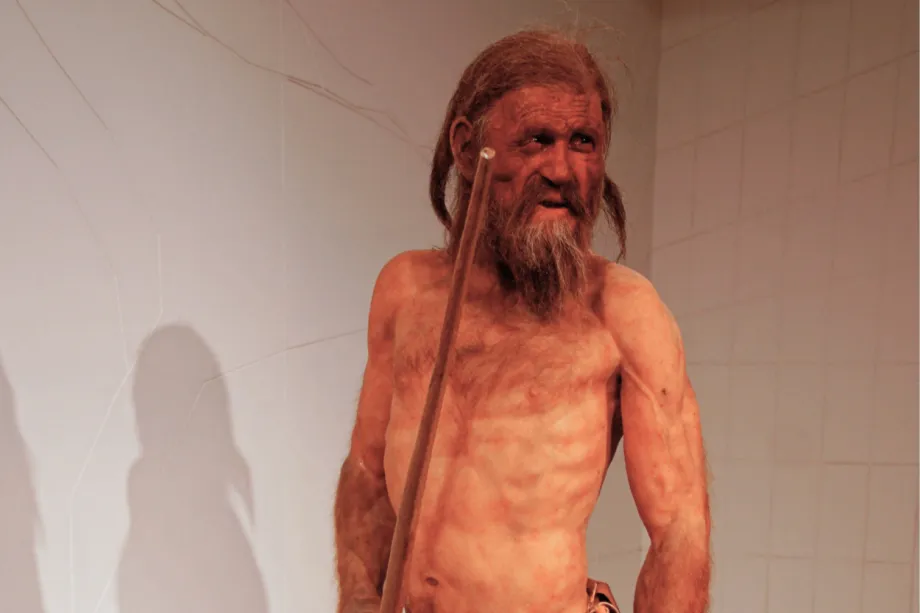
Ötzi the Iceman
This is one of the reasons why the phrase ‘don’t judge a book by its cover’ is so popular – you usually need to delve deeper to understand. The same is true for children's and young people’s cancer. Researchers don’t just look at a tumour, or even just at one cancer cell – they investigate the contents of many cancer cells to uncover why they grow, how they behave, and what fuels them.
Investigating eye cancer in babies
Professor of Stem Cell Sciences at Newcastle University, Majlinda Lako did this in her research work on a type of eye cancer called retinoblastoma, which is usually seen in babies. She hoped to find better treatment options, driven by “the profound belief that no child should have to face a choice between their life and their sight.”
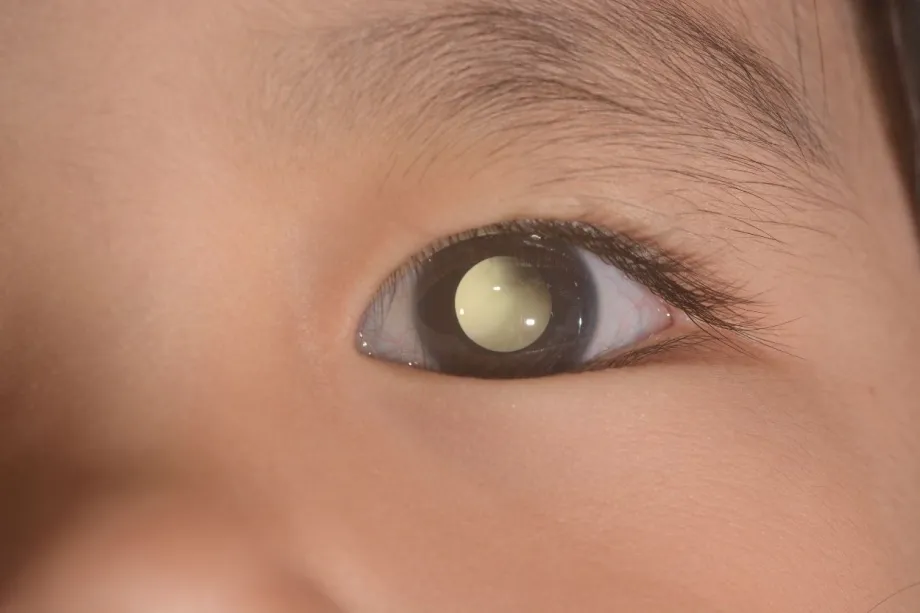
A white pupil is one of the most common symptoms of retinoblastoma, where the eye shines white in a camera flash rather than red. It happens when light reflects off the tumour inside the eye, rather than the healthy red retina at the back of the eye.
While almost all children diagnosed with retinoblastoma survive, there is still an urgent need for safer and more effective treatments. Majlinda explained:
It is incredibly difficult to accept that, even when we ‘save’ a child from this cancer, it often comes at a devastating price.
“Current treatments can leave these children with permanent vision loss, or worse, require the surgical removal of an eye. Watching a family navigate the trauma of their toddler losing an eye is a powerful motivator to find a better way.”
Professor Majlinda Lako
Looking deeper inside cancer cells
Her team at Newcastle University looked at the genetic messages inside retinoblastoma cells, a bit like scientists looking at Ötzi’s stomach contents, to find out what makes the cancer grow. The team knew that retinoblastoma is caused by the loss of a gene called RB1. In healthy cells, this gene keeps cells from dividing too much and prevents tumours. Without it, the cell can grow out of control and become cancerous.
What researchers didn’t understand was the complicated cascade of messages inside the cell after losing RB1. Cancer cells have internal messages, just like how different parts of the body communicate with each other – for example, your stomach telling your brain that you’re hungry. These messages within cells take the form of messenger RNA (mRNA), which can carry instructions around the cell.
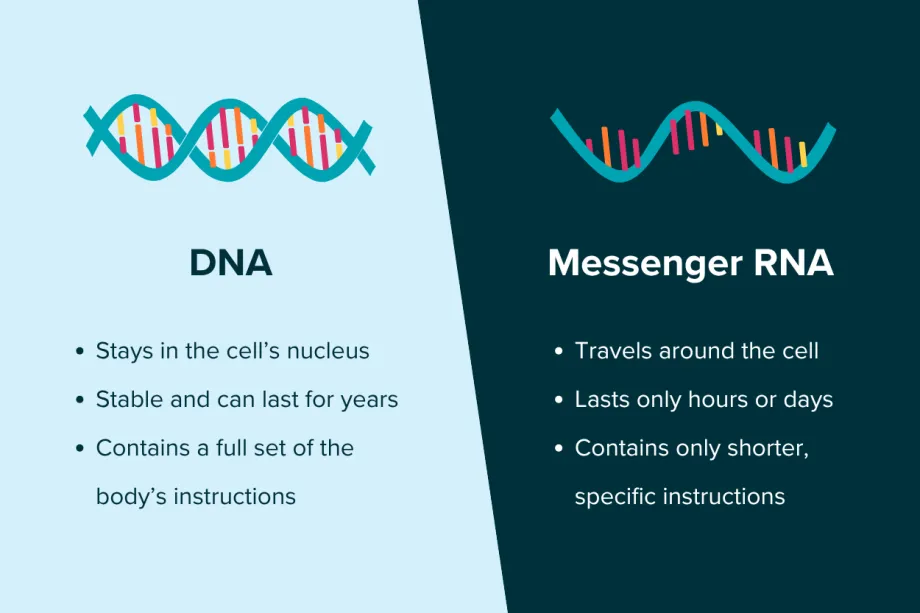
By looking at mRNA messages within retinoblastoma cells, as well as investigating how DNA is stored and used, Majlinda’s team were able to understand why losing the RB1 gene leads to retinoblastoma. Funded by Fight for Sight UK and CHECT UK, their project also found potentially safer medicines for fighting the cancer.
The challenges of treating eye cancer
Kinder treatments are a key priority for families facing retinoblastoma. Treating the cancer can be difficult because the eye has a natural protective barrier that blocks most drugs. Doctors need to use higher doses of treatments like chemotherapy to ensure enough gets through the barrier to kill the cancer. This can lead to serious long-term health problems like hearing loss or kidney damage. For some patients, other treatments don’t work, and they need to have their eye removed.
Majlinda explained:
“Existing therapies often fail to precisely target the specific runaway cells driving the cancer. Furthermore, because different children have different genetic subtypes of this disease, a one-size-fits-all approach is often ineffective.
“By developing more accurate, personalised, and affordable treatments, such as drugs that can be taken easily by mouth or IV, doctors can better reach children worldwide, saving not only their lives but also their sight and overall quality of life.”
In Majlinda’s Little Princess Trust-funded project, her team tested over 30 of their newly identified medicines in the lab. All 30 medicines were re-purposed, meaning that they are already used in other diseases so are known to be safe for children. They worked on specially created ‘mini eyes’ that could mimic how retinoblastoma grows and behaves in patients’ eyes.
She said: “Testing whether a drug kills cancer cells is only half the battle, because the eye is protected by the blood-retinal barrier. This barrier is designed to keep harmful substances out of the delicate retinal tissue – but it also blocks many life-saving medicines. If a drug cannot cross this barrier, it will never reach the tumour without risky, invasive injections directly into the eye.”
Two of these medicines were able to kill the cells that cause retinoblastoma, and one also demonstrated a capacity to cross the blood-retinal barrier – potentially paving the way for more targeted, life-saving treatments. Majlinda hopes that this is just the first step towards a treatment that can be given more easily across the world, “potentially saving the sight and lives of children worldwide without the need for invasive surgery or harsh side effects.”
In order to fully develop a new treatment from their research, the team has to ensure that the medicines work against all of the different genetic variations of retinoblastoma. Because we already know that these medicines are safe for children, as they are used in other conditions, these medicines could be available for children with retinoblastoma more quickly if shown to be more effective than standard treatments.
Together, these findings offer hope for families of treatments that can both protect the lives and the sight of children with retinoblastoma.
We'd love to hear what you thought about this blog - please share your feedback here!

Ellie Ellicott is CCLG’s Research Communication Executive.
She is using her lifelong fascination with science to share the world of childhood cancer research with CCLG’s fantastic supporters. You can find Ellie on X: @EllieW_CCLG


