
Before 2024, you might have seen a ‘junior doctor’ when you went to hospital.
While this term might conjure up images of fresh university graduates without much experience, the reality is very different. Many of these doctors might have had almost 10 years of clinical experience. Fortunately, in 2024, they were officially renamed as ‘resident doctors’ to better reflect their skills and expertise.
Researchers face a similar issue. How would you describe someone who has two or three degrees and up to 10 years of experience working in research? I’m willing to bet you wouldn’t consider them ‘early’ in their career. However, they are often known as Early Career Researchers (ECRs).
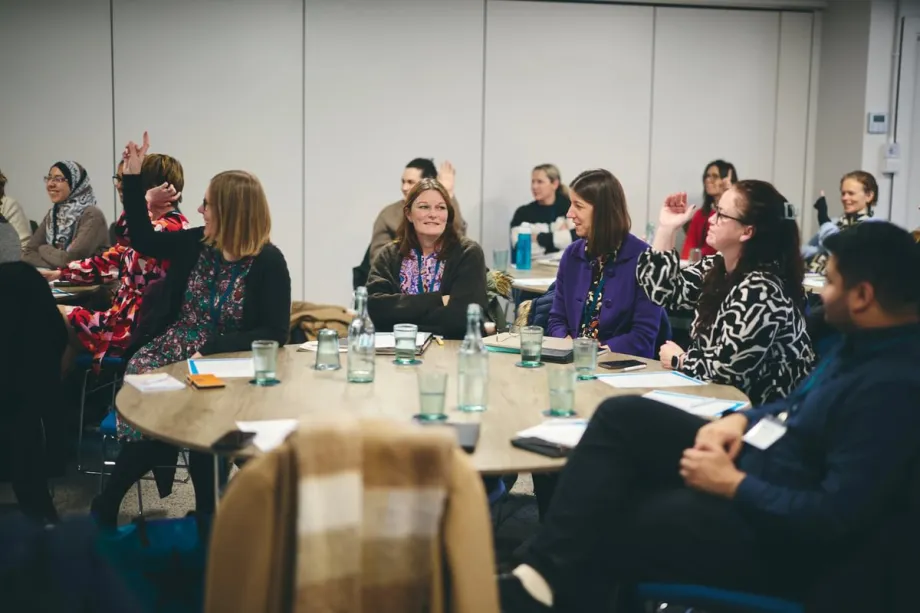
ECRs at the recent CCLG Early Career Research Day.
Post-PhD and before running their own lab can be quite a difficult time to be a researcher. ECRs are often only employed for the duration of a research grant (usually just a couple of years) and, due to their niche specialist experience, can need to move cities frequently to find further work. Finding new work can also mean leaving the field they want to work in, such as children and young people’s cancers, to work in better funded fields like adult cancer.
At CCLG, we want to keep as many promising researchers in the field as possible. Without a new generation of talent, we will lose vital expertise as our current experts retire. That’s why we set up an Early Career Researcher Network as part of our membership.
Lucy Walsh, CCLG's Research Support Executive who looks after the network, said:
The ECR network is part of our commitment to supporting a thriving children and young people’s cancer research community. We want to support and nurture talent to continue the huge developments made by research in this area.
“The network is peer-led and embedded within our wider research community, so early-career researchers have the benefit of tailored support as well as guidance from leaders in the sector.”
Attending our Early Career Researcher Day
Last year, I went along to CCLG’s first Early Career Researcher Day to meet some of our experts of tomorrow. It was a busy day with lots of tips, science, and bonding, but I managed to grab a few minutes with three researchers from Newcastle University.
I first spoke to Dr Simaran Johal, a postdoctoral researcher working on childhood brain tumours. She started her research journey with a PhD in developmental biology – graduating in 2024.
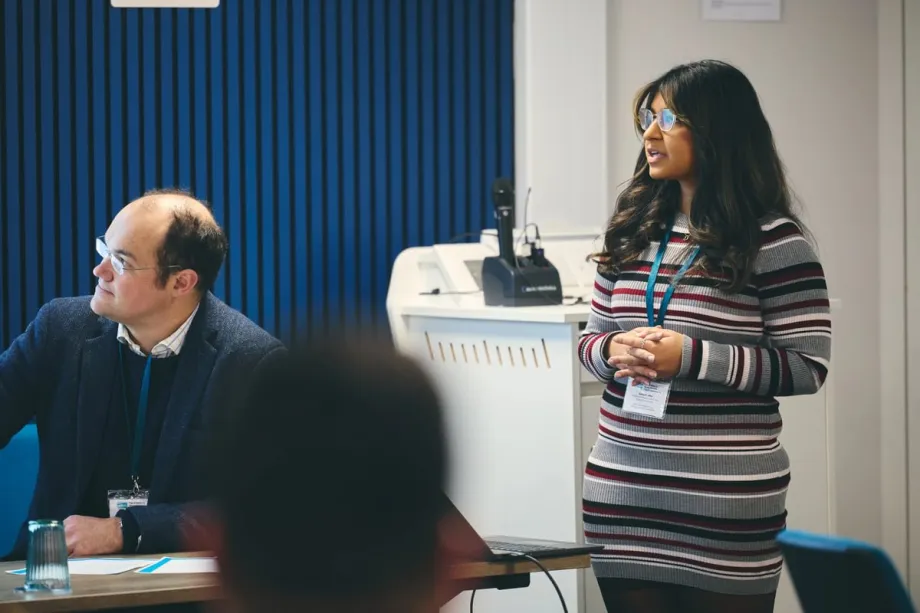
Simaran presenting her work.
Developmental biology is “looking at how cells and organ systems form and how they find their place in the body”, explained Simaran, “which is very linked to cancer because the way cancer develops is by hijacking normal developmental processes and making them dysregulated.”
Her interest in childhood cancer started after having leukaemia as a child. Now, she works on a project as part of the brain tumour group in Newcastle, trying to understand why some children treated for medulloblastoma end up with long-term problems with their learning and memory (called neurocognitive late effects). Without knowing why children get these problems, we can't find the right treatments.
Simaran said:
For cancer patients, the first stage is to survive the cancer. But the second stage is being able to live your life in the way that you want to. It's quite unfair that, even though you have been cured of your cancer, you could still have these late effects 15 or 20 years down the line.
Making a difference for medulloblastoma
Dr Melanie Beckett is also a part of the brain tumour research group, looking at hard-to-treat medulloblastoma.
“I'm trying to understand why some children go on to relapse and how we could prevent that in the future,” she said. “We’re looking at changes in DNA or DNA structures that might cause one person to have a relapse and one not to.”
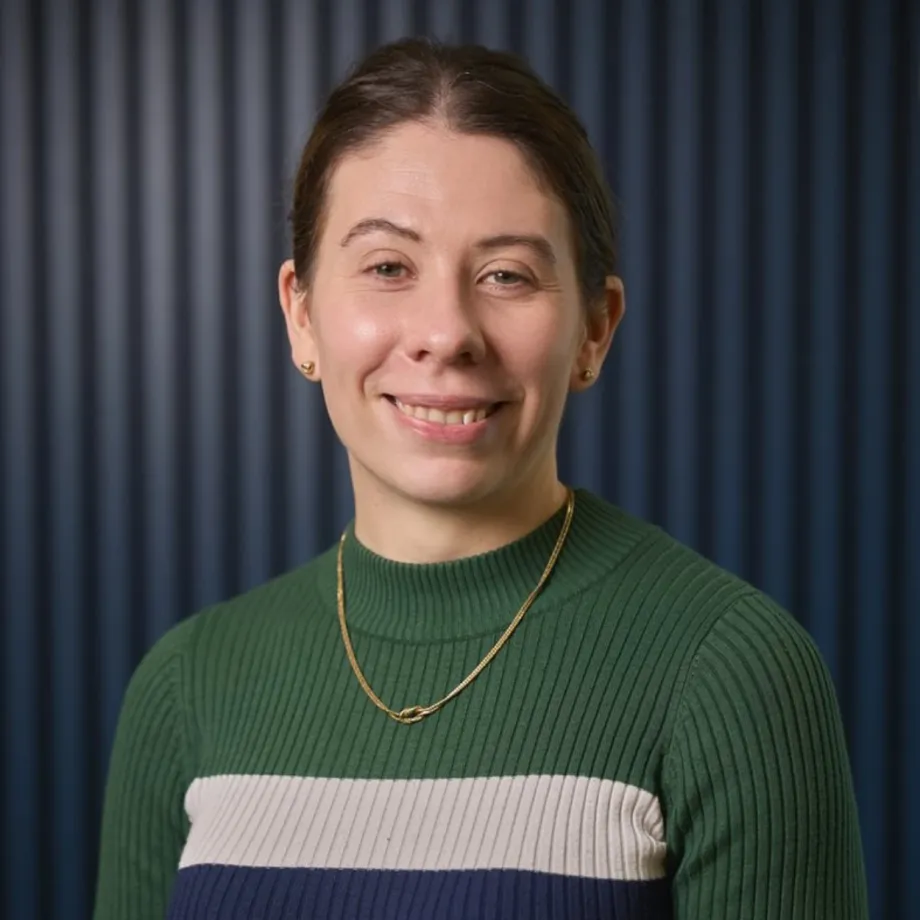
Dr Melanie Beckett
Although Melanie has always found cancer and the biology behind it fascinating, she’s also very passionate about helping people who are struggling with cancer before they have had time to live their life. Medulloblastoma is a particular problem - when it grows back after treatment there often is no cure. Melanie wants to help build a better future for these children with her research.
She began her research career with a master’s degree in 2014 and has been working in the field ever since graduation. She now has a PhD in cancer genetics and over five years working as a postdoctoral researcher. I asked Melanie what she would like people to know about early career researchers.
“Even though we're considered early in our career,” she said, “we still have many years working in the field. And we've studied - often through a bachelor's, through a PhD, through many years of postdoctoral research. And we still will have potentially another 5 to 10 years before being considered permanent and no longer an ECR.”
This rigorous process ensures that researchers are experts in their field, capable of leading innovative research projects that can make a real impact for patients.
Using molecular biology to treat childhood cancer
Dr Alistair Poll is in the later stages of being an ECR – although he has worked in research for seven years, he has only been focusing on childhood cancer for five years.
“I changed field because of the impact,” Alistair explained, “the fact that the molecular biology, which my background was in, could be turned into real benefit for patients.”
Before that, I was in adult cancer, and there’s incredibly valuable research going on there, too. But for me, to see impact that transforms the life of a child, who wouldn’t have had it otherwise, was a really big factor.
Now part of the Van Delft group in Newcastle, Alistair is working on a type of blood cancer called T-cell acute lymphoblastic leukaemia.
He explained: “I’m looking at why children with this cancer relapse or don't respond to treatment. The idea is to use data to inform both our understanding of drug resistance and the ways that we go about treating it.”
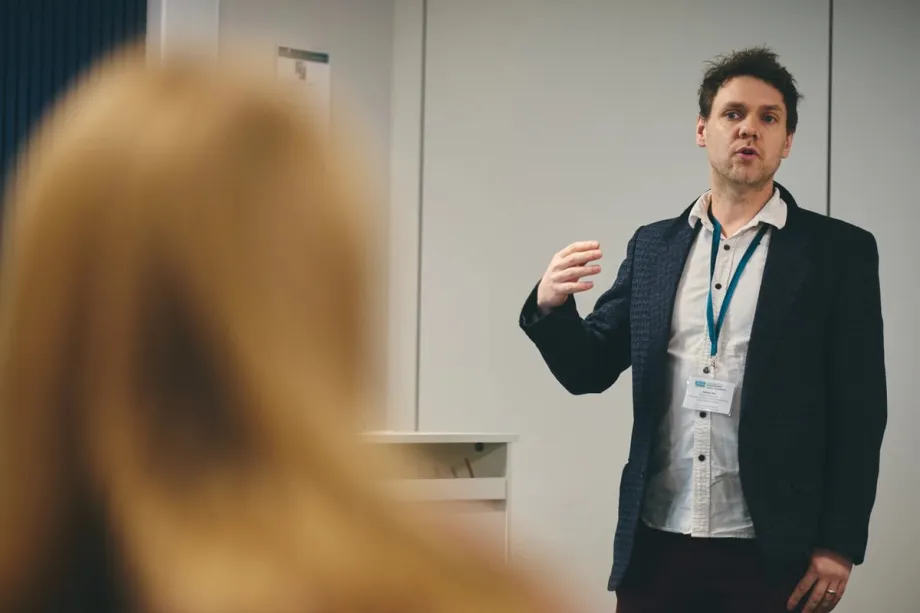
Alistair presenting his work.
Led by Professor Frederik van Delft, the project, funded by The Little Princess Trust, hopes to find out why a new medicine doesn’t help some patients. The medicine ‘Dasatinib’ works alongside existing steroids that can get into leukaemia cells and trigger genes that lead to the cancer cell’s death. For some patients it works really well, but for others it isn't effective at all.
Alistair and Frederik have uncovered a way to quickly identify which patients are most likely to benefit from Dasatinib, and are in the process of testing this with colleagues across Europe. They are currently using the latest molecular biology and computational techniques to understand and overcome resistance to these and other leukaemia drugs to help find other new cancer treatments.
We'd love to hear what you thought about this blog - please share your feedback here!

Ellie Ellicott is CCLG’s Research Communication Executive.
She is using her lifelong fascination with science to share the world of childhood cancer research with CCLG’s fantastic supporters. You can find Ellie on X: @EllieW_CCLG


