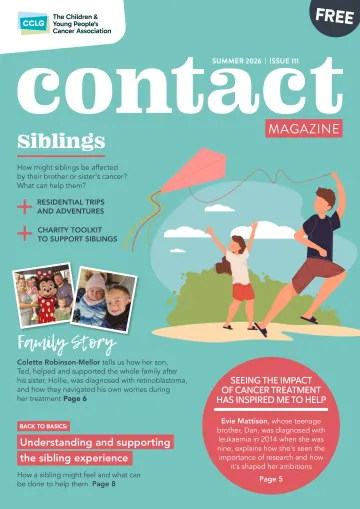
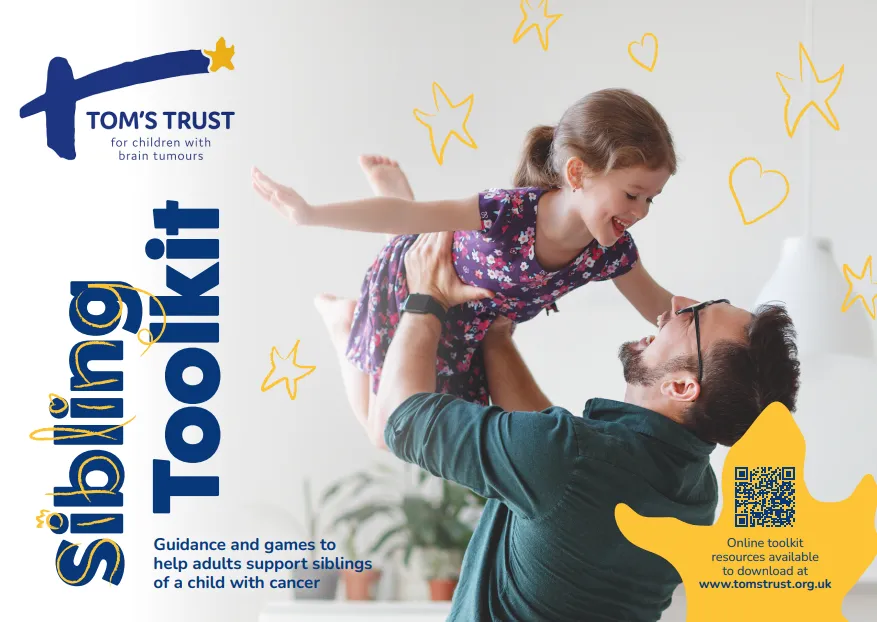
In 2023, Tom’s Trust was proud to fund and launch the UK’s first Sibling Toolkit. This resource is designed to help the brothers and sisters of children with cancer who are often left feeling sad, angry and lonely – a recognised, long-term gap which we knew was important to fill.
Before creating the toolkit, many families had confided in our team and clinical psychologists that the needs of siblings was a huge issue. Parents were looking after their poorly child in hospital, while trying to keep some normality and routine for their children at home. It was difficult giving all their children the attention they needed, while trying to help them understand what was happening, and dealing with the practical challenges of separation during hospital stays.
As a charity which prioritises our families, we know that the immediate family can’t do it all alone and shouldn’t have to. But we were also aware that others might not know how to help, or how much that help is needed.
Developing the toolkit
The lead for the service we help to fund at the Great North Children’s Hospital in Newcastle had the answer. Paediatric neuropsychologist, Dr Sarah Verity, suggested a sibling toolkit to support brothers and sisters of a child with cancer. Tom’s Trust exists to support crucial psychological provision for children with brain tumours and their families, so we were keen to fund this amazing resource. Over 18 months, supervised by Dr Verity, our psychologist consulted experts and families around the country to produce the best possible resource.
It was the first of its kind to address the needs of children who experience the trauma of the diagnosis, treatment, aftereffects, and sometimes bereavement of a sibling with cancer. While we focus on children with brain tumours, it was evident that siblings of children with all types of cancer needed this kind of support, so it was written in a way that applied to every family of a child with cancer.
It’s also designed for other adults in and around the family, such as grandparents, aunts and uncles, teachers, friends, or club leaders. In the toolkit, clinical psychologists reassuringly explain how to offer help: for example, giving lifts to clubs, so normal life can continue in small ways, and talking about the subject of a child’s illness with their sibling. It was a whole-family approach, which has always been at the forefront of what we do at Tom’s Trust.
Our co-founder Deborah Mitchell started Tom’s Trust after the tragic death of her beautiful nine-year-old son, Tom, from a brain tumour in 2010. She explained how Tom’s sisters sometimes spent months in hospital where Tom was confined to one room due to his low immunity. His sisters felt confused, anxious, sad, angry, and sometimes traumatised by what they saw – but the resources from professionals were only available to their brother. She knew the document would have made an enormous difference to Tom’s sisters, and many children like them.
How the toolkit has been received
Over the two years since launch, we have received thanks from families across the country – both those who could see how valuable the toolkit would have been in their family’s own journey, had it been available, and those who have used it themselves. One of the most poignant statements for me about the toolkit was: “Thank you for not forgetting about us, the siblings.”
Post-launch, awareness continued to grow. We were invited to speak to media outlets including BBC Breakfast. The toolkit was presented at the International Symposium on Paediatric Neuro-Oncology conference in America and has since been downloaded over 1,000 times. We’re so excited to see that number grow as we work to make the toolkit more accessible and create other resources that help children and their families thrive beyond diagnosis.
From Contact magazine issue 111 | Summer 2026