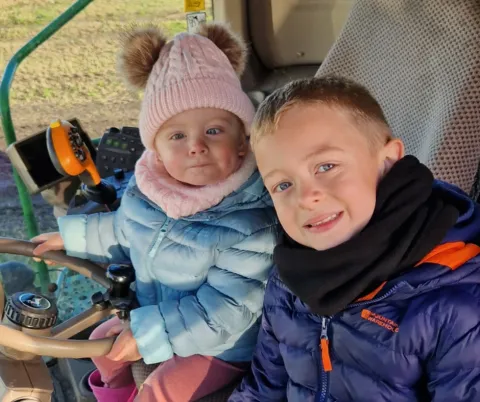
Hollie had always been a very confident, independent and content little baby. She loved her food, sleep, and most of all, adored her big brother, Ted. She wanted to be just like him and followed him everywhere. Anywhere Ted was, Hollie wanted to be!
It was on Ted's fourth birthday that I noticed from flash photos that Hollie had a white glint in one of her eyes. I thought nothing of it until a few days later when picking her up from her cot I noticed her pupil looked like glass. I could see there was a white substance through her pupil. We had her checked at the St Helens Eye Clinic and from there we were referred to a team of amazing specialists at Waterfall House in Birmingham Children's Hospital. After a few days, Hollie was officially diagnosed with retinoblastoma. As parents, we were in our worst nightmare. We were completely shocked, angry and in absolute terror. We didn't understand it, didn't know what we needed to do next, and felt completely helpless.
Hollie would have to receive nearly all of her treatment at Birmingham, which was quite a distance from home. Within two weeks, she’d undergone her first round of chemotherapy. Our normal family life had to stop, and it suddenly became filled with appointments, phone calls and cancelling work, holidays and future plans. We began grieving the family life we once had.
How Ted kept us going
A week after Hollie had been diagnosed, it was time for Ted to start his first day in reception at school. As parents we don't really remember Ted's first day of school. We remember it as the day Hollie had her first MRI to check if the cancer had spread to her optic nerve. We tried our absolute best to not let it affect Ted and to try to continue to celebrate his little milestones, despite what was going on around him.
Ted, keeping his routine and begging us to get up in the morning to go downstairs to play and wake Hollie to come with him, kept us going as a family and pushing through every day, even if we felt like we couldn't face it. At age four, he kept our whole family life rotating. Even though he could see we were emotional and having difficult days, he'd give us cuddles, wipe our tears away and simply ask, "Can you come and play with us now?"
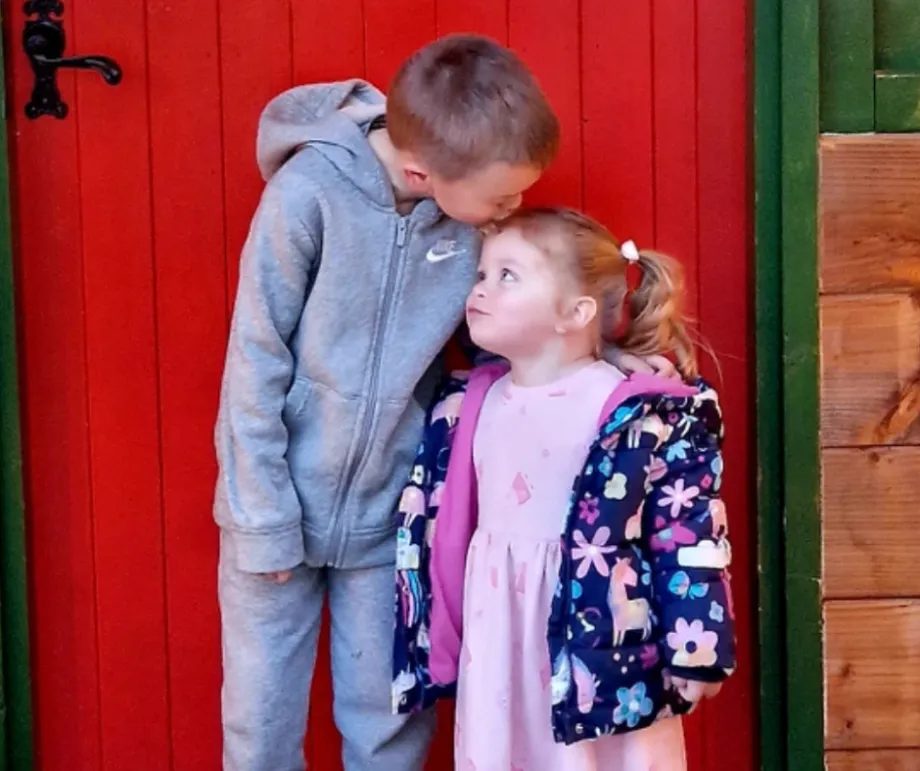
Ted’s support for Hollie
Ted could see over time, through reading books with him and coming to appointments at the hospital, that his sister was poorly, and that we as a family had to deal with all these changes and sacrifices to try to save Hollie’s eye. He could see her vulnerabilities when she was poorly from treatment and was so kind-hearted in helping to look after her. He’d always let her have a choice of cartoon, first choice on toys to play with and, if Hollie was being clingy to me, he wouldn't get jealous. Instead, he’d get her dummy, blankie, or a toy she liked to help comfort her. On appointments at the hospital, Ted always came in at visiting time like a breath of fresh air. Everyone looked forward to his arrival, especially Hollie. As soon as she could hear him coming round the curtain she'd try to sit up and want to play immediately. He’d be just as excited to see her and would climb up onto the bed to join her.
Hollie would struggle to eat when she was on treatment so Ted turning up with snacks to share could always get her nibbling something. He could translate what she wanted, whether it be a particular cartoon or toy, as he was so in tune with her when she was just beginning to learn to talk. He was so helpful and he was able to give us a minute as she was so happily occupied with him. Ted has stood by her at parties and at soft play when other children have asked what's wrong with her eye and why it doesn't move. Ted will simply reply: "That's just Hollie, my sister, there's nothing wrong with her." He stands up for her and protects her at all costs.
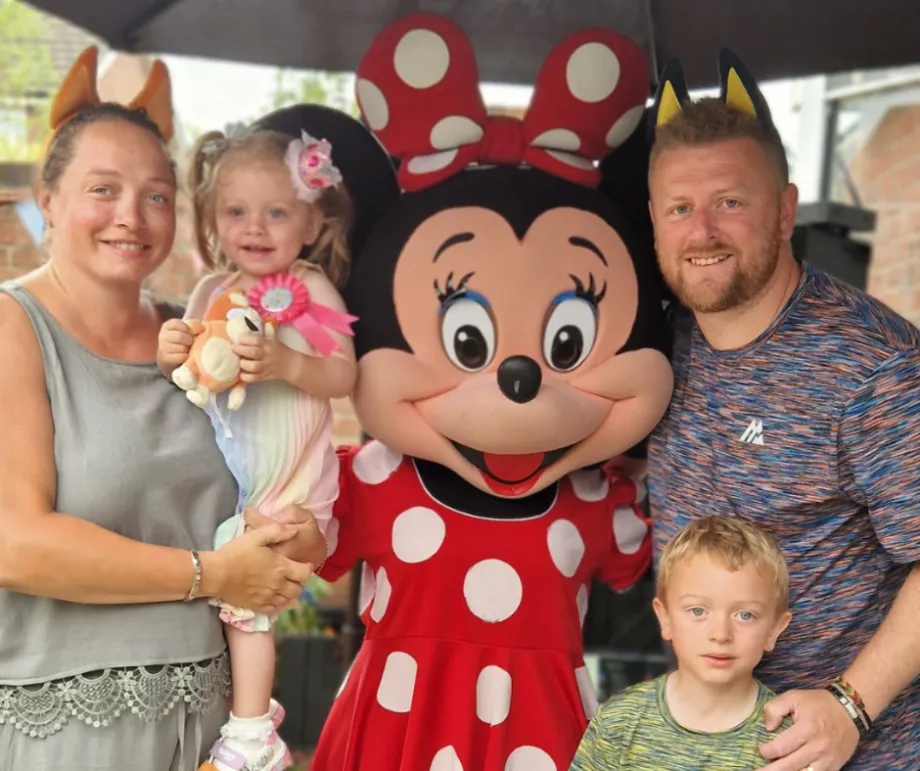
Navigating Ted’s worries and emotions
With Hollie’s condition, she sometimes had 'rose tears' after treatment. This is blood when she cries, which Ted was a bit unsure about. Ted also sometimes struggled with the concept of bandages due to Hollie always looking sore and poorly when her bandages were removed because before treatment, she looked fine to him. He almost believed that the bandages caused the soreness. Ted is overcoming these worries as time goes on and he can see the change in his sister now she's had her eye removed to remove the cancer. No matter how poorly Hollie looked or how unsettled and sick she was, he never judged her. He treated her the same no matter what. He respected her vulnerability and it brought out a caring and loving character from him. Ted still struggles to understand how she’ll never be able to see from that eye again and it upsets him that it won't work for her.
What support have we received?
We’re currently receiving days out from the Owen McVeigh Foundation, whose aim is to create memories for children affected by childhood cancers, and the Joshua Tree, which helps support families affected by childhood cancers through a range of services. Early on, a charity called Phoenix Rising provided us with so much support and information on how to get help.
The Childhood Eye Cancer Trust (CHECT) also greatly supported us. Ted helped to raise over £7,000 for CHECT through bake sales, litter picking and raising awareness of the charity during Retinoblastoma Awareness Week, which was the week when Hollie had her eye removed. He and Hollie were awarded CHECT Champion Awards for courage and bravery in the face of adversity.
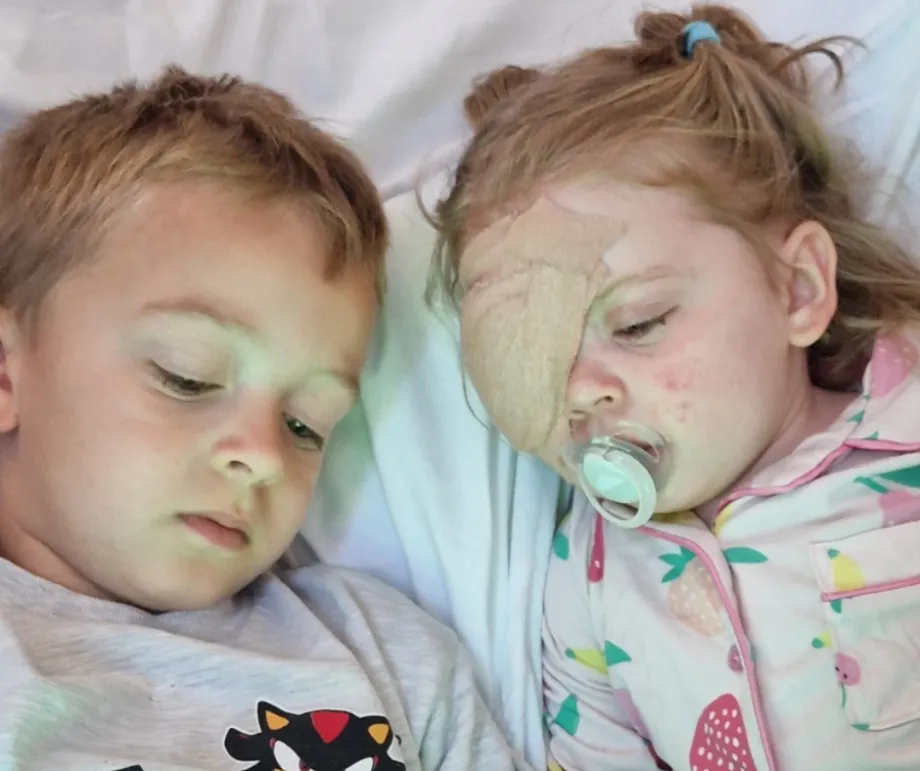
What life looks like for us now
Hollie is incredibly resilient and is learning to love sleep, food and life again. She loves going to nursery and has become such a funny little character, full of sass and sweetness. After her eye removal, we saw a massive difference in her personality. She developed a spring in her step and started singing all the time. Her physical movement improved, and she was just so much happier.
As parents we didn't realise how much pain Hollie was in with her eye as it had become her normality and she just learned to deal with it. Since her eye removal, Hollie has been in remission. Her right eye socket is healthy and the small tumour that had developed in her left eye is now a scar and is being closely monitored for any changes. Hollie’s cancer is genetic and means she is more susceptible to melanoma and sarcoma in childhood. Her and Ted are still best friends and absolutely adore each other and love spending time together. Hollie wants to start playing football on the weekend to be like him.
Moving forward, we hope to become more financially stable, process the trauma and get back to some normality with fewer hospital appointments. We’ve tried to press the restart button on family life and leave behind the things that didn’t lift us up. This included me finding the strength to leave my job of 14 years to pursue a different career and find the support I needed. We also found that although we lost touch with a lot of people, and felt very isolated during diagnosis and treatment, by reaching out to charities, we have been able to find new friendships.
From Contact magazine issue 111 | Summer 2026