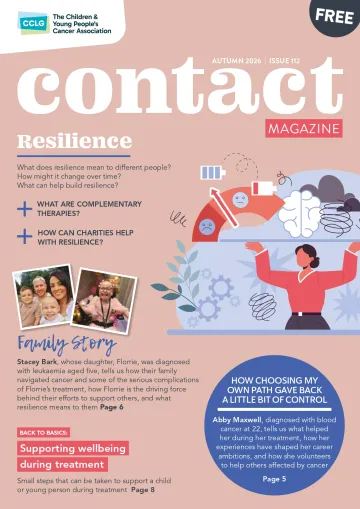
Before I began my treatment for high-grade non-Hodgkin lymphoma, my biggest concern was losing my hair, but this changed completely once I started chemotherapy. The nausea and sickness were the hardest part of my experience. I still deal with significant anxiety related to this, but I’ve found ways to cope, including using essential oils and massage to help manage stress, nausea, and anxious feelings. I had to stay at University Hospital Hairmyres due to the constant sickness before being admitted as an inpatient at Beatson West of Scotland Cancer Centre, where my care was exceptional. Though my treatment affected my energy levels and I was feeling sick for so much of the time, I did my best to try to still enjoy life where possible and do as much as I could. I still went to concerts, still went out with my friends, and even went to college throughout my treatment. There was always a risk of infection, but I thought it was important to do as many ‘normal’ things as I could, when I was feeling well enough and not in hospital. I was offered the use of the hospital's psychology services and peer support programmes throughout treatment, but it wasn’t something I wanted to do at the time. The medical team were always great at checking in with me to see if I’d changed my mind, but I just wanted to concentrate on getting through treatment. This won't be the same for everyone, and choosing your own path is really important because it gives you a little bit of control at a time when you don't have much of it. However, since finishing treatment, I’ve really benefited from these services. It’s been a godsend to meet other young people who’ve been through cancer, and mostly, we just talk about normal young people things.
How contributing to a podcast has also helped
I’ve been involved with the Radiotherapy Podcast since its first season. The podcast brings together teenage and young adult cancer survivors to talk about their experiences, and this has also really helped in processing my experiences. It was the first example of peer support I’d taken part in, and after that I started going to more peer support events. It’s also given me a real boost of confidence. The thought of thousands of people listening to my voice would have terrified me before cancer, but not anymore. I’m now working behind the scenes, too, helping to come up with and gather ideas about what we want to talk about. In the second series, we were able to bring on our parents and partners, so we’ve been able to get a lot of different perspectives involved, which has been great.
What life looks like now
I’m almost three years cancer-free, and life feels well balanced right now. I still experience high levels of anxiety, particularly around my health, and I received some difficult news about my fertility last year. However, cancer has made me a more resilient person, and I now know that I’m capable of so much. I’m now engaged to my partner of nine years, Liam, and I’ve begun a new career as a complementary therapist. I’m nearing the end of my Higher National Diploma course and have been accepted to university to study Integrative Healthcare. I also volunteer as a complementary therapist for Marie Curie Hospice and with Look Good Feel Better, where I provide skincare and make-up classes for people affected by cancer.
Advice to others
If I could give one piece of advice to a young person diagnosed with cancer, it would be to remember that cancer isn't linear. There’ll be days you have never felt worse and some days you feel relatively ‘normal’. Everyone’s experience is different, so don’t let someone else’s story define your own.