Q: Tell us a little about your career so far?
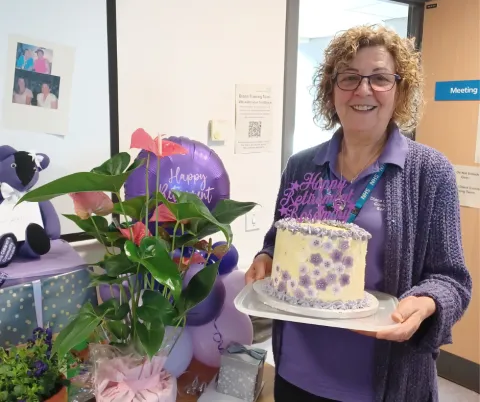
A: After completing my Nursery Nurse Examination Board exam and working in placements in day nurseries and a primary school, I went to Nottingham City Hospital to do a course with neonatal babies. I loved this, but wanted to be with older children, and also wanted to travel. So, at the age of 19, I ended up as a nanny in Turkey, where I remained for the next 20 years, marrying and having two children. During this time, I completed an online Teaching English as a Foreign Language course and taught English to school-aged children. I then worked in an international school as a reception class teacher in Istanbul and later in Antalya.
After returning to the UK in 1996, I completed my certificate in Hospital Play Specialism and had placements in Leicester Royal Infirmary and Derby Children's Hospital. After completing my Healthcare Play Specialist Education Trust, I worked as a play specialist on the paediatric oncology ward, where my passion for sibling support began. I observed that most of the care and support was directed towards the sick child and the parents. I read various research papers and articles, which showed that siblings are likely to have emotional and behavioural problems, headaches and stomach aches, changes in appetite, sleep problems and changes at school.
In 2001, I started a sibling support group to provide fun and friendship for siblings aged 4-15, and children enjoyed a variety of activities as well as information days where they could ask questions and share and talk about their feelings. It proved a great success and continued until I left in 2007 to work as a community play specialist for the Child and Family Support Service (CAFSS) in Leicestershire, part of the Diana Children’s Community Service. The next big milestones in my career were completing a master's degree in counselling children and young people, graduating in 2011, then becoming team lead for CAFSS in 2018.
The sibling information days I facilitated while on the oncology ward gave me great insight into their thoughts and feelings
Q: Tell us about your role in supporting children with cancer and their families
A: CAFSS provides emotional support and specialist play to children who have been diagnosed with a life limiting/ threatening medical condition, and their siblings. A large part of our caseload is oncology, and we use counselling techniques and creative narrative techniques, which provide a safe environment for children to talk and share their thoughts and feelings about their own, or their sibling’s diagnosis and treatment. Techniques include therapeutic story writing, social stories, relevant books and games, worksheets, hospital play and a variety of art and craft activities.
Q: Why's it so important for care and support to include siblings too?
A: When a child’s diagnosed with cancer it affects the whole family. Anxious for their sick child, and feeling overwhelmed by the situation, parents may inadvertently overlook the needs of their other children. Treatment means parents spend extended amounts of time in hospital and siblings may often be left in the care of others.
The sibling information days I facilitated while on the oncology ward gave me great insight into their thoughts and feelings. Siblings referred to themselves as sometimes feeling invisible, with an account by one sibling explaining he’d been out with his dad, and a neighbour had stopped and asked his dad how his brother was. Although this was an oversight, he had felt ignored and “invisible”.
Q: What's the most rewarding thing about your role?
A: Working with children and seeing how they benefit from our service. I think I can speak for my colleagues when I say I feel privileged to be able to offer the support we do helping children and young people navigate an extremely difficult and traumatic experience in their lives. I’m proud to work for such an amazing service. The care and support given to families by the whole Diana Service is exemplary.
Q: Do you have a message for children and young people with cancer and their siblings?
A: Sharing your thoughts and feelings is important, never feel any question you want to ask is a ‘stupid one’, and you are resilient, you will get through this.
From Contact magazine issue 111 | Summer 2026