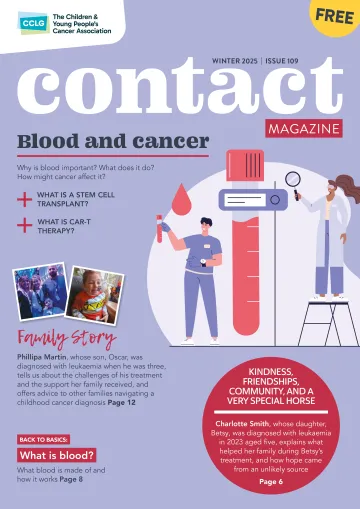
Blood is a vital fluid that circulates throughout the body and keeps you alive. It transports oxygen from your lungs to every part of your body and brings nutrients to your cells so they can work properly. Blood also helps remove waste products, fights infections, and helps heal cuts. Whole blood is made up of about 55% plasma (a straw-coloured liquid containing salts, proteins, sugars and fats suspended in water) and 45% blood cells. It travels through an extensive network of blood vessels, including arteries and veins, which carry it to and from all parts of the body. At the smallest level, blood flows through capillaries – tiny, thin-walled vessels where the exchange of oxygen, nutrients, and wastes occurs between the blood and surrounding tissues. Through this continuous circulating movement, blood plays an essential role in supporting every cell and maintaining overall health.
Types of blood cells
Most of the cells in your blood are red blood cells - they look like round discs that are fatter around the edge than in the middle. They don’t have a nucleus like most other body cells, but they use that extra space to pack in loads of haemoglobin molecules, giving them their red colour. Haemoglobin is an iron-rich protein that can bind to oxygen when there’s lots of it around (e.g. in the lungs) and let go of it when there’s not much of it in the environment (like in the tissues). Red blood cells do the important job of transporting oxygen to other cells all over the body to allow them to carry out their own important jobs.
Platelets are small purplish cells that help your blood to clot, which means they stop you from bleeding too much when you get a cut. We used to think platelets only stopped bleeding, but the more we find out about them, the more we realise that they’re much more complicated than that. They contain many chemicals that have no known role in blood clotting, they are part of the inflammatory response, and they can bind directly to bacteria.
White blood cells are the body’s defenders; they help fight infections by attacking germs like bacteria. There are several different types of white blood cell:
Granulocytes are a group of white blood cells that include neutrophils, eosinophils and basophils. They’re quick to fight infection, often by swallowing germs and destroying them. Neutrophils are especially important as they can react very quickly as first responders and are very good at stopping us from becoming unwell when we have bacterial infections.
- Lymphocytes (B cells and T cells) are part of our adaptive immune system, which provides a more sophisticated response to infection. B cells produce antibodies and T cells have receptors on the cell surface that can recognise proteins from germs that might cause us harm. The lymphocyte response can be tailored to specific infections, and they can remember infections we’ve been exposed to in the past. Lymphocytes are the reason most of us will only get chicken pox once!
Taking blood samples
When we take blood, we use different sample tubes depending on whether the test is done on whole blood, serum or plasma. Sometimes the blood samples need to go to different laboratories too, so we often need several different sample tubes.
By measuring different salts, proteins, enzymes, hormones, antibodies, fats, glucose and other elements in the blood stream, we can tell how well different organs, like the kidneys and liver, are working. We can tell whether a body has enough nourishment, we can measure inflammation and see how well the body is responding to challenges like infection. Some blood tests can tell us about damage to organs like the heart, liver or pancreas and others can tell us whether hormone systems or blood clotting are working as they should. We can look at numbers of blood cells, measure drug levels and even extract DNA to look at an individual’s genetic make-up.
How chemotherapy may affect the blood
Your bone marrow is constantly working to produce new healthy blood cells. Red blood cells survive for around three or four months in the bloodstream once they’ve left the bone marrow, but platelets only last for seven to 10 days and neutrophils for less than 24 hours. As many chemotherapy drugs interfere with cells reproducing, they can have a particularly powerful impact on bone marrow, which has to produce many millions of cells every day to maintain a normal blood count.
Anaemia is a low level of haemoglobin in the blood, reducing the amount of oxygen that can be delivered to the tissues. This can make people feel washed out, tired, breathless, or dizzy. If the haemoglobin is below a certain threshold, or someone’s having symptoms of anaemia, a red blood cell transfusion can be used to top up the haemoglobin level.
Many patients receiving chemotherapy will have a low platelet count at some time during their treatment. We call this ‘thrombocytopenia’, and it can lead to easy bruising or bleeding (like nosebleeds, gum bleeding or skin rashes). Sometimes this can be improved with medicines, but if there’s significant bleeding, a platelet transfusion can be given.
A low neutrophil count is also common in children or young people who’ve had chemotherapy treatment. This is called ‘neutropenia’ and leaves people vulnerable to severe infection, potentially leading to sepsis. Sometimes it’s possible to shorten the period of neutropenia by using a growth factor called G-CSF, but this isn’t suitable for use in all conditions. Granulocyte transfusions are possible, but they’re more risky than other transfusions and aren’t good at preventing infections, so they’re reserved for life-threatening infections. The most effective treatment for bacterial infections is the prompt use of powerful antibiotics, which is why patients on chemotherapy treatment are asked to come straight to hospital if they are feeling feverish, shivery, unwell, have a raised or very low temperature, or show any other signs of infection.
From Contact magazine issue 109 | Winter 2025