The day your child is diagnosed with cancer is a day that shatters your world. The signs were subtle, yet terrifyingly clear in retrospect. Just a few days before his official diagnosis, we took him to the GP with a temperature and earache. We were told he had a virus, but a parent’s instinct is a powerful thing. The next day, I noticed a very small, strange rash on his eyelids. When I pressed on it, it didn't blanch. We knew something was wrong.
We rushed back to the GP, where a nurse practitioner, thankfully, shared our concern. She called in a specialist GP who immediately wrote a letter for us to go to hospital. We were told not to worry, but our hearts were already pounding. We arrived at the hospital, and after a long wait, Oscar had a blood test. A play worker then came to sit with Oscar and we were escorted into a room with tissues on the table. Our hearts sank as we were told they suspected leukaemia.
Our ‘new normal’
Within hours, we were transferred to Sheffield Children's Hospital and admitted to the cancer ward. It was Jubilee weekend, a time for celebration, but for us, it was a time of unimaginable grief and fear. Oscar was quickly fitted with a portacath, and his treatment began with chemotherapy. We were given a treatment plan which included chemotherapy drugs and steroids.
Oscar’s treatment lasted for more than two years. Throughout this time, we had to find a way to navigate this new reality, not just for Oscar, but for our whole family. We quickly learned to work to the strengths of our relationship. I couldn't cope with being at home when our baby was so poorly, so I’d stay at the hospital during the night.
My husband and Oscar’s dad, James, couldn't deal with the constant lack of sleep, so he’d be at home. He’d then come to the hospital to share the ‘day jobs’, allowing me to have walks in the park, take a breath of fresh air, or just keep me company on those lonely days. This approach also helped with continuity for our three other children, who were also sharing the burden of the unknown every day.
From the very beginning, we agreed to Oscar being placed on a clinical trial. We wanted to ensure he was getting the most cutting-edge treatments available, and we also wanted to help other families by contributing to research. But this had its own challenges. Partway through the treatment, we were faced with a decision that felt impossible. We were asked to choose between two paths which had different risks and benefits attached. I spent many hours crying over this decision. The hospital staff were outstanding, offering us support, a shoulder to cry on, and never judging the battles we were going through.
The hospital staff were outstanding, offering us support, a shoulder to cry on, and never judging the battles we were going through.
The challenges and impact of treatment
The steroids were particularly tough. They caused huge changes in Oscar's mood, appetite and mobility. There were days we couldn't leave the kitchen because he was constantly hungry. Then, just as suddenly, the steroids would stop, and he’d lose his appetite and start getting sick every day. We made the difficult decision to have a nasogastric tube placed to help with medication, hydration and nutrition. This made a world of difference, saving us from constant battles just to get him to eat or take his medication.
Oscar was incredibly brave and compliant through countless blood tests, scans and procedures. This included numerous theatre trips. He had to have bone marrow taken for testing and chemotherapy injected directly into his spine. No matter how many times we went, we never got used to seeing our child be put to sleep. It was heart-wrenching. He often woke up distressed and very sickly, but the staff were amazing in ensuring he was given the best care, from holding his hand until he drifted off, to comforting him when he woke up.
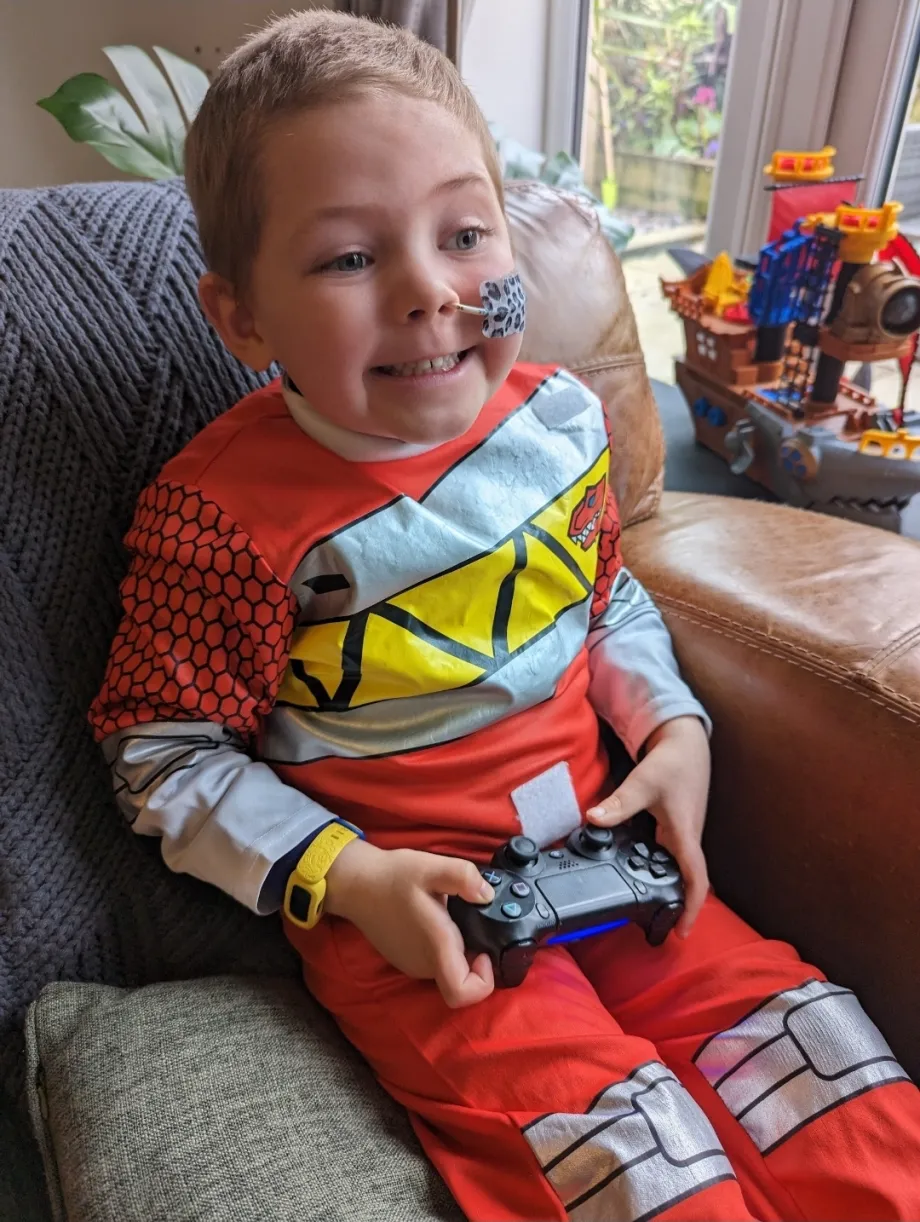
Oscar
The anaphylactic episode he had from one of his chemotherapy drugs was a terrifying setback. The ambulance came to our house and took him to our local hospital, where he was treated and admitted. This meant a complete change in his treatment plan, with a different chemo drug administered every other day for four weeks.
We also made the difficult decision to shave Oscar’s head before his hair started to fall out. This was a moment of taking some control back in a situation where we felt powerless. A small highlight during this time was hydrotherapy. It was the only time we saw Oscar truly happy and mobile, free from the pain and stiffness that the steroids had caused.
The biggest challenge, however, came during the maintenance phase of treatment. We’d been told it would be easier with fewer hospital trips, but Oscar became very ill with recurring infections. Seeing him on oxygen, fighting for his life, was harrowing. Eventually, the hospital reduced his chemo levels, and things slowly became more manageable.
The power of support
This journey wasn’t one we walked alone. We received immense support from various organisations. Young Lives vs Cancer helped us with practical things, like applying for Disability Living Allowance and a blue badge, which made hospital trips with Oscar's decreased mobility much easier. PACT, a charity for parents of children with cancer, provided comfort with food and presents. The hospital chaplains and staff were amazing, and the POONS (paediatric oncology outreach nursing specialists) were always at the end of the phone, ready to help.
But the biggest support came from the other families on the cancer ward. We formed a unit, sharing our experiences and understanding each other in a way no one else could. We were a community built on shared struggle and hope.
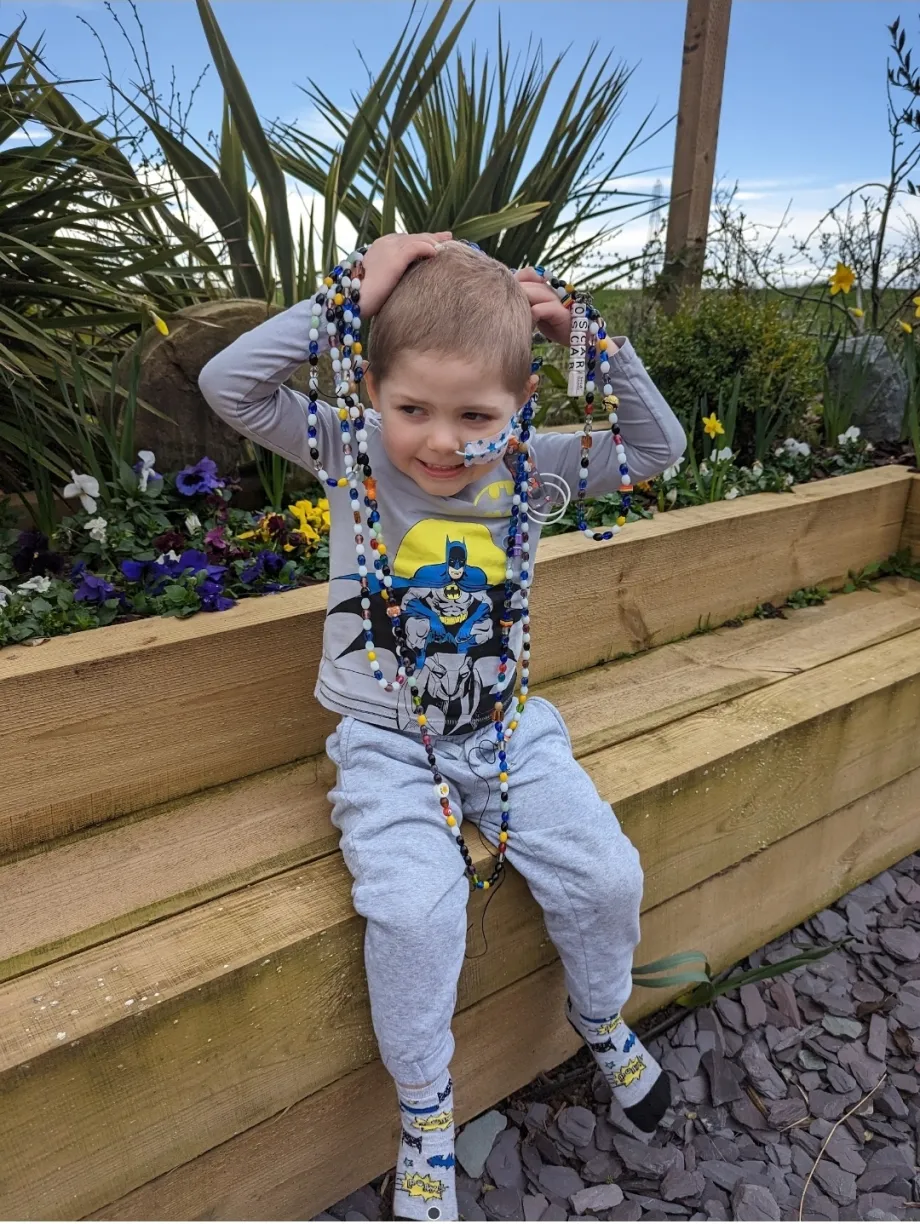
Oscar with his beads of courage
Moving forward
As the end of treatment approached, I began to struggle with my own mental health. I was terrified of being left without the constant support of the hospital, of having a vulnerable child and feeling alone. Psychology services were a huge help for both Oscar and me during this time. Oscar still struggles with anxiety and separation issues, but he’s becoming more confident. This year, we were finally able to enjoy our first family holiday, a truly cherished moment.
Oscar is now seven and is on six-monthly check-ups, with blood tests and a chance to talk to the doctors. He still has ongoing leg pains, for which we're supported by physiotherapy. This journey affected our whole family, including his three older siblings, who also received support.
Our journey has been a testament to resilience, hope and the incredible power of love. We’re so proud of how far Oscar has come, and grateful for every new day we have with our brave, beautiful boy.
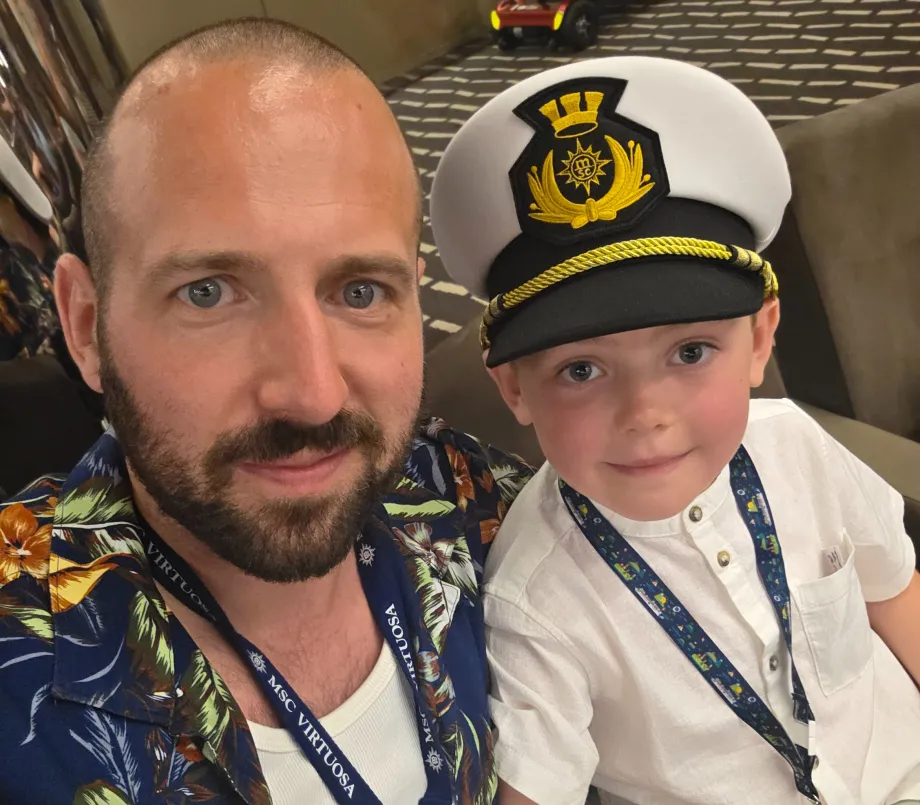
Oscar with his dad, James
Our advice to other parents
- It's okay not to be okay. Treatment is hard, and you’ll have tough days. But don’t suffer in silence. The hospital staff and other parents are there to support you.
- The steroids are tough, but it doesn't last for ever. The side effects are brutal, but they’re temporary.
- Make the hospital feel like home. Bring things that make you and your child feel comfortable.
- When people offer to help, take it. You can't do this alone.
- Be kind to yourself. Do whatever makes your life easier during this impossible time.
- Be honest with your child. Let them be part of their treatment. Don't make promises you can't keep. It's okay to tell them that something will hurt, but it's making them better.
- Trust your instincts. If something feels wrong, get it checked out.
From Contact magazine issue 109 | Winter 2025