Before Max’s diagnosis, he played football and rugby every week. Everything he did revolved around sport. He was normally full of energy, but for a couple of months, he hadn’t been himself. He was extremely lethargic. He'd walk upstairs and fall asleep on the way. He'd had multiple sickness bugs as well and he kept picking up every bug going. And then he started coming up in unexplained bruises.
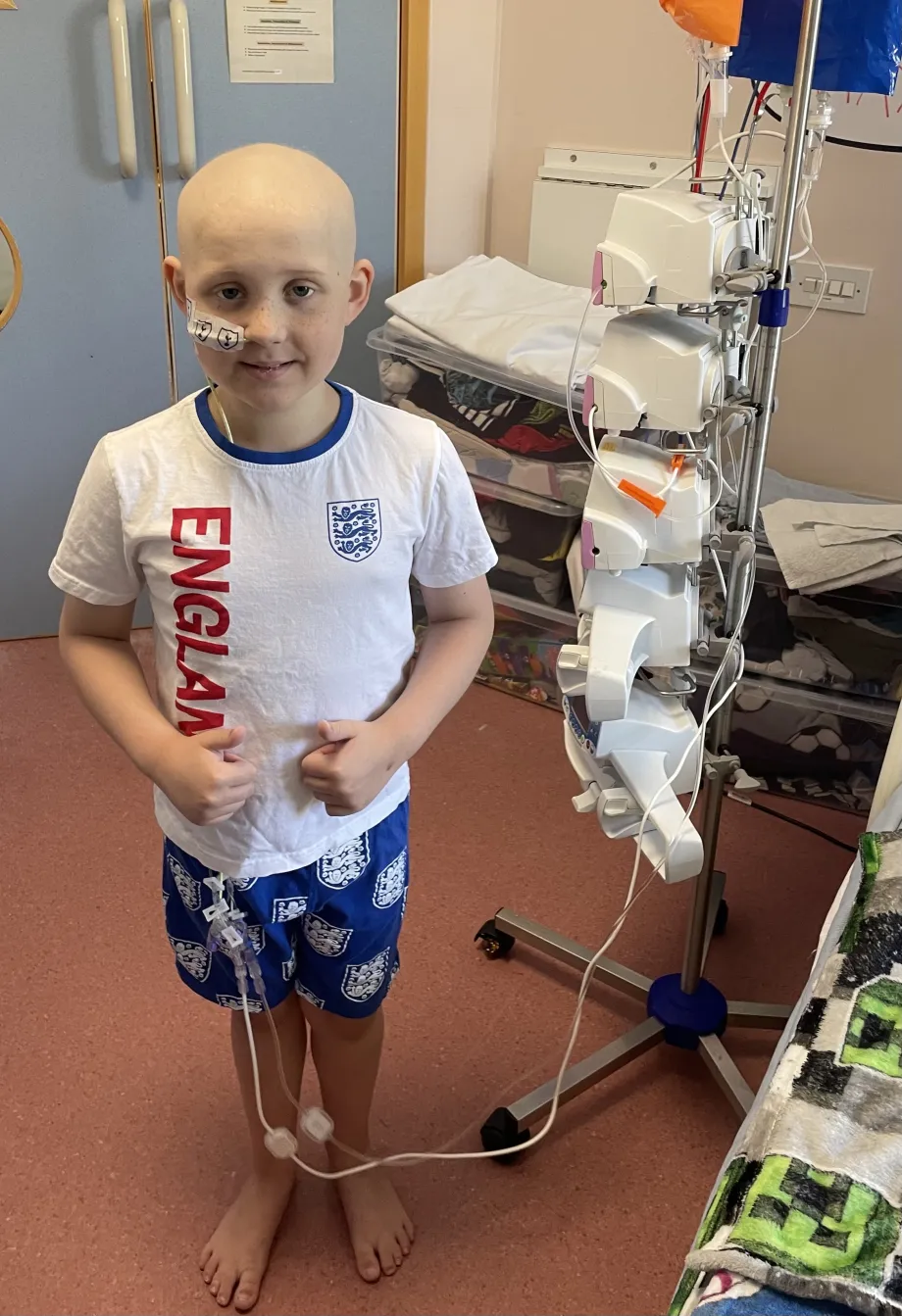
Max during treatment
One evening, after the bruises appeared, I took Max to the hospital on the advice of 111, where after suffering a seizure and having a really high temperature, he was diagnosed with sepsis. Max spent a week in hospital, during which time his bone marrow became suppressed. Over the coming months, he was carefully monitored with blood tests to check his bone marrow was repairing itself as it should have been.
Doctors had briefly mentioned the possibility of Max having leukaemia, but his blood tests weren’t showing conclusive evidence. We were going for weekly bloods, and we were told it was doing what it needs to be doing, but they’d keep monitoring him.
He went back to school. He had his birthday party. And then on the fourth week, we had his bloods done in the afternoon, went home, and then we got a phone call saying we needed to go to A&E. We got him out of bed, went in, and were taken to a side room and told he had leukaemia. It was a massive shock.
Max's treatment
Max’s treatment began quickly, but despite nine months of chemotherapy, autoimmune therapy, transfusions and various other procedures, his cancer was still present. This meant he would need a bone marrow transplant. We were told that without one, his chance of survival was just 10%.
Sadly, none of us in the family were matches, but in time, an anonymous full match was found on the register. We were admitted to a hospital, miles from home for over five months while Max underwent pre-transplant treatment. This included full-body radiation twice a day for several days before he could receive his ‘magic cells’.
This was a really difficult time for us as a family, both because of the intensity of the treatment and because it meant Max and I had to be away from home, away from his dad, Dave, and his older brother, Ronnie. It was complete isolation. It was really tough.
Support from CCLG
During Max’s treatment, we were supported by CCLG’s information resources, which especially helped in those early days and weeks after his diagnosis.
CCLG’s information was one of the first leaflets we were given. When Max got diagnosed, the doctors told us not to google anything. CCLG’s leaflets explained exactly what each individual treatment is, what leukaemia is and what his type of leukaemia is. So, we've always gone to CCLG’s website, rather than googling and it’s been a real help.
Max’s treatment was a bumpy ride. Nothing was easy. But support from charities like CCLG helped to make things a little easier.
What life looks like now
Max is now nine and finished treatment in May 2024. Though he’s still being closely monitored, he’s doing really well. He's at sports club now, still football-mad, and back to running around. He's not as fit as he used to be, or as he'd like to be. But he's getting there.
As a family, we’re now dedicated to raising funds for research into childhood cancer and awareness of it and its impact. As a parent, I want to help ensure other children who receive a cancer diagnosis stand the best chance of recovery.
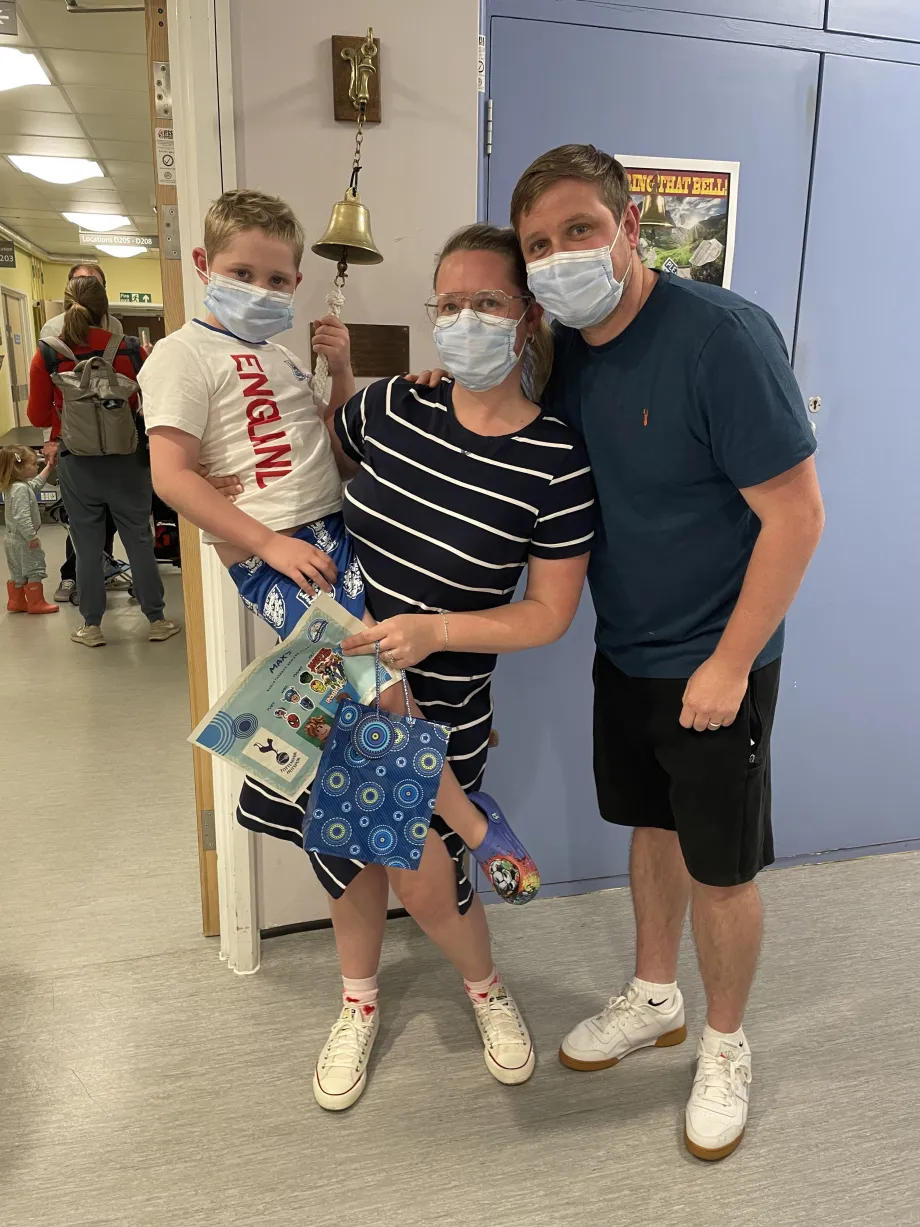
Max with Laura and dad, Dave, ringing the end-of-treatment bell
From Contact magazine issue 109 | Winter 2025