Q: Tell us a little about your career so far?
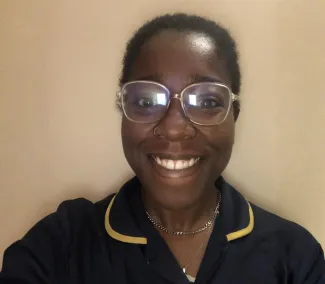
A: I'm a paediatric haematologist at Bristol Royal Hospital for Children where I’ve been a consultant since 2007. I first became interested in the treatment of children with leukaemia during a year working in Sydney, Australia, where I was fortunate to work with some outstanding senior colleagues.
Whilst there I was offered a paediatric oncology job in Bristol, and I haven’t moved far since. I was again super fortunate to be encouraged to undertake my PhD studies in Bristol, investigating the role of minimal residual disease analysis (MRD), an area which I still work in to this day.
Q: Tell us about your role in supporting children with blood cancer?
A: There are quite a few parts to this. I’m an active clinician taking responsibility for my patients during their treatment journey. But, on top of that, I help to lead the department in Bristol and also lead clinical trials in acute lymphoblastic leukaemia (ALL) in the UK as well as continuing to support clinical delivery of MRD analysis for childhood ALL.
Lastly, I must mention the VIVO biobank where I’m an associate director. The biobank is such an important vehicle for supporting so many of the childhood blood cancer research studies being done in the UK and internationally.
Q: What is the ALLTogether-1 trial and what is your role in it?
A: The ALLTogether-1 trial is a multinational trial involving around 14 countries in Europe, seeking to improve the outcomes for children with newly-diagnosed ALL.
At its heart is the desire to both reduce the toxicity of therapy while also increasing the chance of cure for those children at greater risk of dying from their disease. To achieve these dual aims requires a detailed understanding of each patient’s risk of treatment failure.
MRD is a big contributor to this risk stratification process. I have a few roles in the trial. I helped develop the original trial protocol and in particular the MRD-based stratification, given my experience in that area. I’m national principal investigator in the UK, which largely involves lots of paperwork and explaining things in the protocol to colleagues where the protocol isn’t clear (it’s a very complex study).
At its heart is the desire to both reduce the toxicity of therapy while also increasing the chance of cure for those children at greater risk of dying from their disease
Q: What are you most proud of in your career?
A: The fantastic teams of people that I work with, who all have children with blood disorders as their central focus.
Q: What does your job mean to you?
A: It’s a life-enhancing companion during my brief sojourn in this world.
Q: Do you have a message for children and young people with cancer and their families?
A: It’s a marathon not a sprint. Take care of yourselves and take hope in the ever-improving treatments that can be provided.
Oh, and keep a notepad by the side of your bed to write down all those irritating ‘two in the morning’ questions!
From Contact magazine issue 109 | Winter 2025